In shortThe Great Ocean Road memorial arch spans both lanes at Eastern View, on the coast between Aireys Inlet and Lorne. Plaques and a sculpture of the road builders stand beside it. More than 3,000 returned servicemen cut the road between 1919 and 1932 as a First World War memorial, and the arch is the standard photo stop heading west.
242 kmlength of the memorial road, Torquay to Allansford
1919-1932years the returned servicemen spent building the road
3,000+returned servicemen who cut the memorial road
from $112starting price, 14-hour small-group eco day tour
Where the Great Ocean Road memorial arch stands
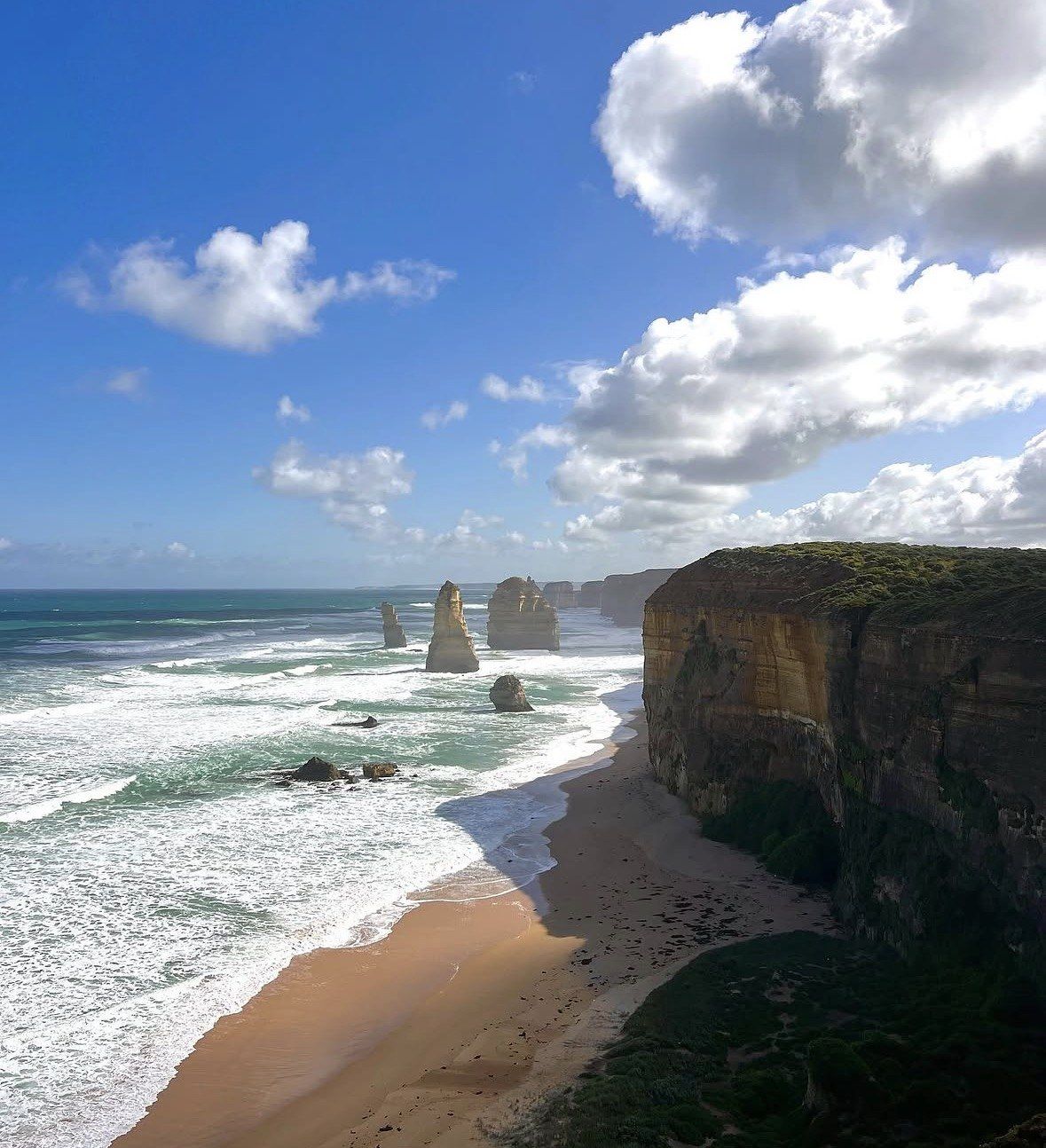
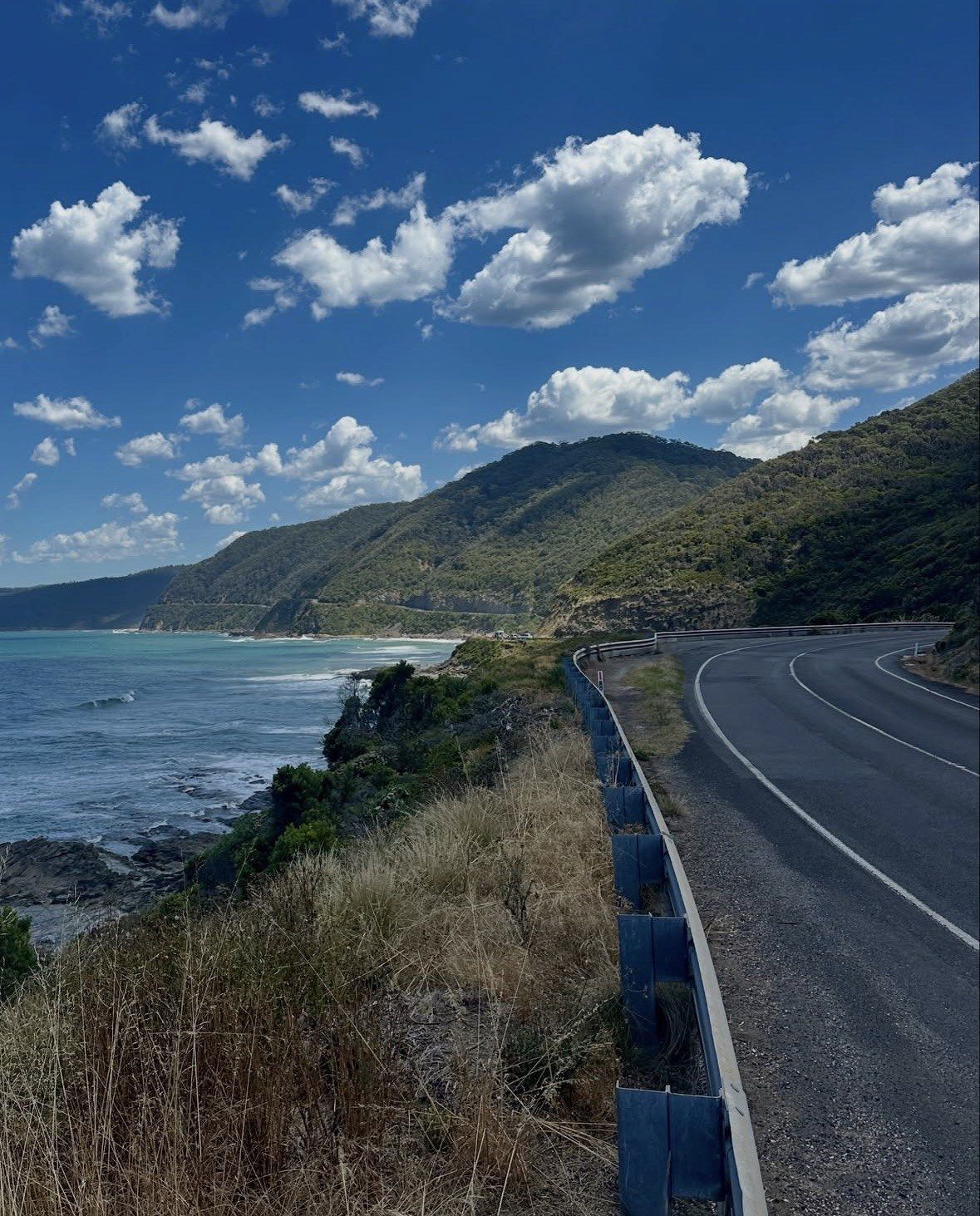
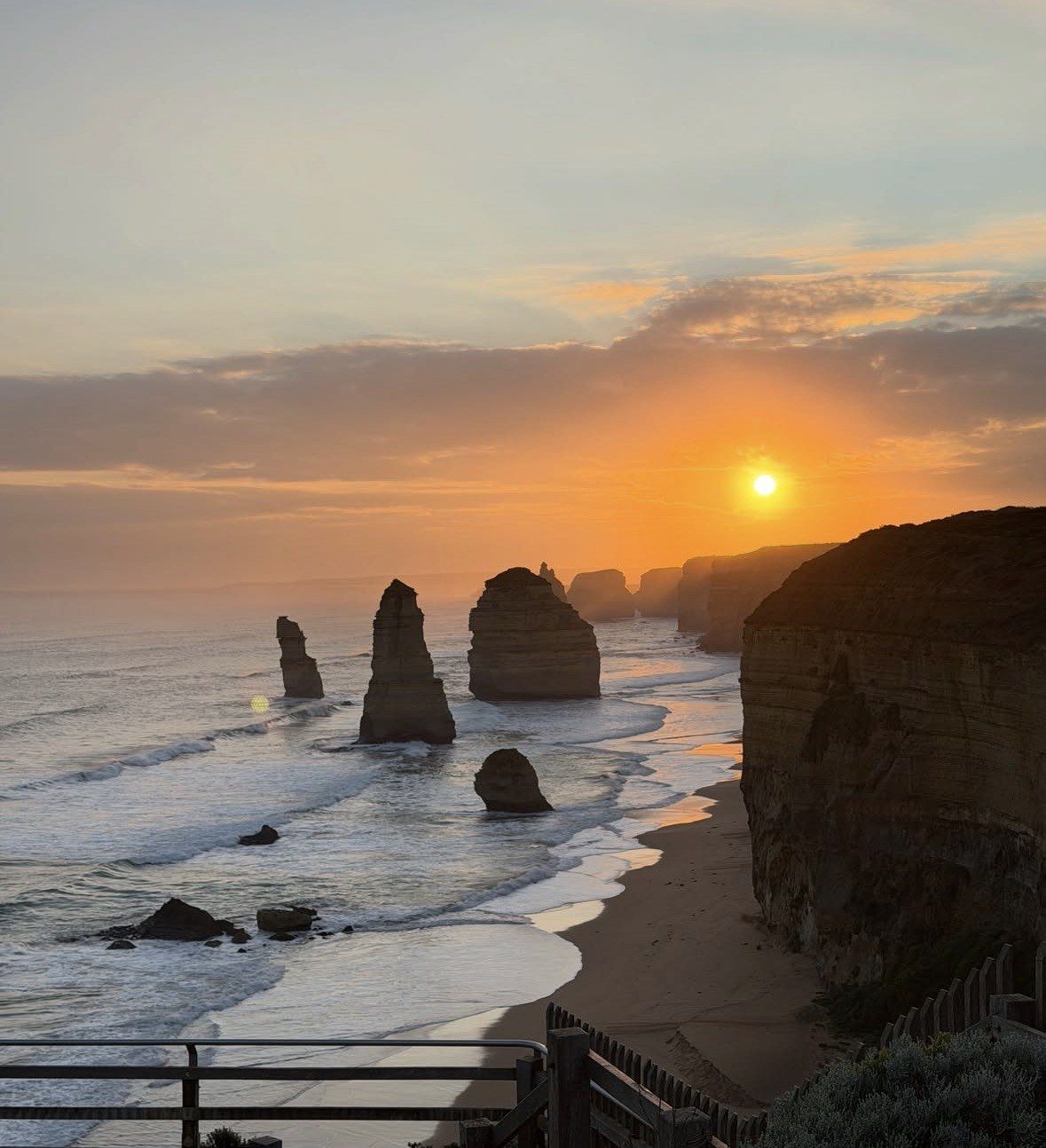
The arch stands at Eastern View, on the coastal run between Aireys Inlet and Lorne: timber beams across both lanes with the road's name set into them. Land drops to the water on one side and climbs into bush on the other. Traffic passes underneath, so photographs get taken from the verge.
Plaques at the base say what the structure is for. This is a war memorial in the shape of a road, and the arch is where that is spelled out for people who would otherwise drive straight through. A sculpture of the builders stands alongside with tools in hand, for the men who came home from the First World War and then spent thirteen years cutting the alignment out of the cliffs above the water.
Drivers stop here for practical reasons too. It comes early in a westbound schedule, needs only a few minutes, and it is the one stop where the name of the road appears in the photograph. Keep your standing time for the coast further west.
- Timber arch over both lanes, with the road's name across it
- Plaques recording the First World War dedication
- The sculpture of the road builders beside the arch
- Coast views in both directions from the verge
The full-coast day, 14 hours from $112
For the arch, the Surf Coast and the far western lookouts in one run, this is the longest day on the site and the most reviewed, at 4.9 ★ (7098 reviews).
★ 4.9/5 · 7,098 reviews
The men who built the road, 1919 to 1932
Work started in 1919, the year after the Armistice, and the last section was finished in 1932. More than 3,000 men back from the First World War did the digging, and the completed road was dedicated to those who did not return. The arch is where that dedication is stated, and without it most visitors read the drive as scenery and nothing more.
The memorial road runs 242 kilometres from Torquay in the east to Allansford in the west. That makes Torquay the eastern start, with the arch standing some way along the coastal section. In 2011 the route was added to Australia's National Heritage List as the Great Ocean Road and Scenic Environs.
| Record | Detail |
|---|
| Years of construction | 1919 to 1932 |
|---|
| Who built it | More than 3,000 returned servicemen |
|---|
| Purpose | Memorial to those who did not return, First World War |
|---|
| Official route | Torquay to Allansford |
|---|
| Length | 242 kilometres |
|---|
| National Heritage List | Added in 2011 as Great Ocean Road and Scenic Environs |
|---|
Split Point Lighthouse at Aireys Inlet
Aireys Inlet is the village immediately east of the arch, and the white lighthouse tower on its headland is the second quick stop on this stretch. Clifftop paths run from the tower to lookouts above the reefs, with the coast visible back towards Anglesea in one direction and out past the arch in the other. Twenty minutes covers it comfortably.
Aireys Inlet has its own weather station, and it reads warmer and far drier than anything you will meet later in the day: a January mean maximum of 23.2 °C, and only 620.4 mm of rain a year falling across 93.7 rain days. Wind is what to dress for. The 3pm mean sits at 20.9 km/h across the year and peaks at 22.6 km/h in September, and on an exposed headland that turns a mild afternoon cold.
Eat before you walk if it is getting late. Kitchens along this coast often stop serving by 2:30pm, and Anglesea back up the road is dependable for a meal.
Stopping for photographs on this stretch
Australia drives on the left, which catches out most first-time visitors, and the road-use advice for the region is specific about where you may and may not pull up. A blind corner is off limits for a photo, and so is the mouth of a private driveway, which rules out most of the tempting gaps in the hedges between here and Lorne. Use the slow-vehicle turnouts when traffic builds behind you, and get fully off the carriageway before anyone opens a door.
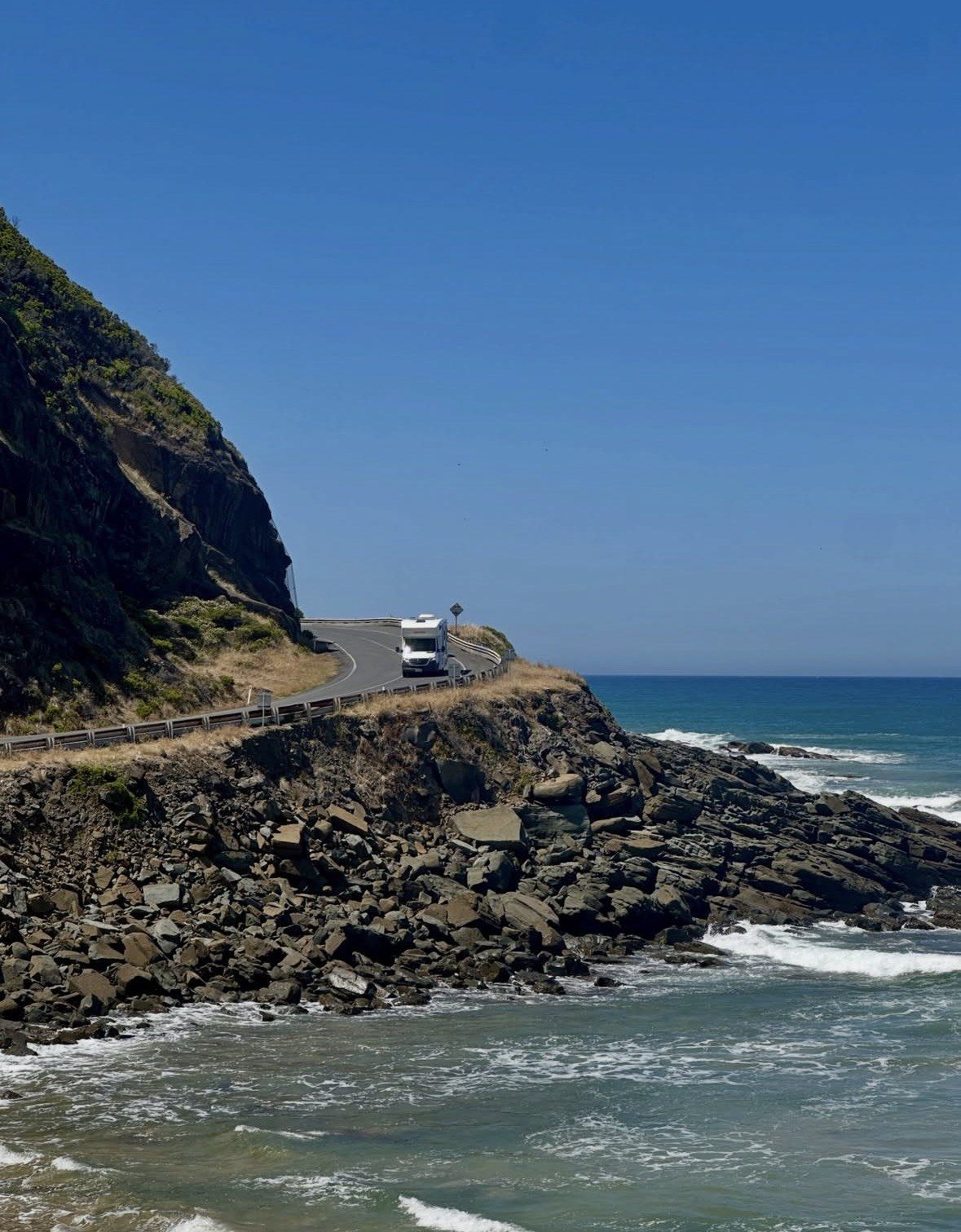
Reception is the other practical catch. Mobile coverage along the road is unreliable, so download maps and accommodation details before you leave town instead of counting on a signal at the arch. West of Lorne the road narrows and tightens all the way to Apollo Bay, and it is slow going, so the kilometres on a map tell you little; the official advice there is to break every 45 to 60 minutes and to stay off that section after dark.
Tours take that decision away from you. Someone else picks where the vehicle stops, and you spend the coastal section looking at the water instead of the next bend.
Fitting the arch into a day tour from Melbourne
A classic westbound departure reaches this stretch during the first part of the morning, so the arch and the lighthouse come up while everyone is still fresh. Reverse-itinerary tours run inland first and come back along the coast in the afternoon, which puts the arch near the end of the day. The photo stop is the same length either way.
Travellers who want the arch and the far western lookouts on the same ticket take the small-group eco day: 14 hours from $112, rated 4.9 ★ (7098 reviews), reaching more of the 242 kilometres than any other single-day run on this site, with pickup from selected hotels, WiFi on board, national park fees and coffee and/or tea. The coach alternative is the Full-Day Great Ocean Road and 12 Apostles Tour, 13 hours from $70 and rated 4.7 ★ (717 reviews), which puts live commentary, Aussie guides, a free audio guide app and national park entry fees behind the same stops. Its morning start is on foot, at the corner of Flinders St and Market St at 7.00am, and lunch is bought during the Apollo Bay stop.
Both allow a full refund if you cancel at least 24 hours before departure, so a poor forecast two days out is still a decision you can act on. The prices and ratings above come from a check in November 2026 and shift as more passengers rate the trips.
Questions people ask
Is the memorial arch the start of the Great Ocean Road?
No. The memorial road runs 242 kilometres from Torquay to Allansford, and the arch stands further along, on the coastal section between Aireys Inlet and Lorne. It works as a symbolic gateway, and the plaques there explain the memorial, which is why itineraries treat it as the opening stop.
Can I walk up to the arch and the sculpture?
Yes. People photograph the arch and the sculpture from the verge, and tour vehicles pull in so passengers can walk across to the plaques. Traffic runs underneath at normal speed, so keep children close and stay off the carriageway. Drivers should pull completely clear of the road before stopping.
How long does a tour stop at the arch?
A few minutes. The pause is short by design, with the longer standing time kept for the lookouts further west. Travellers who want more time on this part of the coast are better served by a two-day or three-day tour, which is also what the regional tourism body suggests for the road as a whole.
Do I need to book anything to visit the arch or the lighthouse?
Nothing is booked for this part of the coast. The booking requirement sits at the far western end: since 16 October 2026, entry to the Twelve Apostles precinct has covered the car park and the lookouts as well as the visitor centre. That precinct also moves to a booking fee from April 2027, with no amount published yet, so confirm the conditions for your own travel date before you set the western half of the trip.
What else is worth stopping for between the arch and Lorne?
Keep the list short, because the road slows from here. Aireys Inlet and the clifftop walk at its lighthouse are just east of the arch, and Anglesea behind that is reliable for a meal before kitchens close around 2:30pm. West of Lorne the alignment narrows towards Apollo Bay, with official advice to rest every 45 to 60 minutes.
Read also