In shortGreat Ocean Road weather runs four real seasons and can turn within a couple of hours. The whole annual swing at Apollo Bay covers a 21.9 °C mean maximum in January down to 13.1 °C in July, and its 1060.0 mm of rain is spread thinly across 127.1 days; choose the Surf Coast end instead and the yearly total drops to 620.4 mm. Winds at Cape Otway peak at 27.6 km/h in August. Pack layers and a windproof jacket for any month.
21.9 °CApollo Bay mean maximum temperature in January
13.1 °CApollo Bay mean maximum temperature in July
49.3 mmApollo Bay rainfall in February, its driest month
27.6 km/hmean wind at Cape Otway, 9am and 3pm in August
What this coast does to a day out, season by season
Seasons run the southern-hemisphere way, so January is high summer and July is mid-winter, and the gap between them is narrower than most visitors expect. Measured at Apollo Bay, the full annual range in mean maximums runs from 21.9 °C in January down to 13.1 °C in July, with overnight means of 13.9 °C and 7.3 °C. Cape Otway Lighthouse, the long-record station for the Otway coast, sits just behind at 21.5 °C in January and 13.0 °C in July.
Wind matters more than temperature when you plan the day. Mean speeds at Cape Otway run from 21.6 km/h for the 9am reading in March up to 27.6 km/h at both 9am and 3pm in August, which makes late winter the roughest stretch on the clifftops. Aireys Inlet is breezier in the afternoon than in the morning: 20.9 km/h at 3pm across the year, 22.6 km/h in September. Those are station readings. On an unsheltered viewing platform with spray coming off the Southern Ocean, the same wind takes several degrees off whatever your phone says.
Rain arrives often rather than heavily. Spread 1060.0 mm across 127.1 days of 1 mm or more, as the Apollo Bay record does, and you have a coast where a passing shower somewhere in a long day is the baseline. The two ends of the road do not share one climate. Aireys Inlet on the Surf Coast takes only 620.4 mm over 93.7 rain days, while Warrnambool Airport in the west records 892.7 mm over 140.7 days, more wet days than Apollo Bay on less total water. Carry a windproof shell and one warm mid-layer in every month, and check the radar on the morning itself rather than a week out.
- A windproof outer layer, in January as much as in July
- A warm mid-layer you can pull on at a lookout and shed in the vehicle
- Closed shoes with grip, since most viewpoints involve steps and boardwalk
- Sun protection for summer, when the 3pm sea breeze hides how much sun you are taking
- Offline maps and saved confirmations, because mobile reception along the route drops out without warning
Great Ocean Road weather by month
The widget on this page carries the live forecast for the coast; the table carries the averages that forecast swings around. Figures come from Bureau of Meteorology station records for Apollo Bay, Cape Otway Lighthouse, Lorne, Aireys Inlet and Warrnambool Airport. Where a station publishes no monthly figure, the column describes the pattern instead of inventing a number.
Sea temperatures are not published on the official pages for these towns. Treat the water as cold enough to want a wetsuit at any time of year, and judge the beach on the day you are standing on it. For how the lookouts will feel, the wind readings are the better guide.
| Period | Temperature | Rain | Wind and daylight | What it means in practice |
|---|
| December to February | January mean maximum 23.2 °C at Aireys Inlet, 23.0 °C at Lorne and 21.9 °C at Apollo Bay, where the mean minimum is 13.9 °C | Apollo Bay's driest month is February: 49.3 mm over 5.6 rain days | Aireys Inlet averages 20.9 km/h at 3pm; the longest day falls around 22 December | The busiest weeks of the year, with Victorian school holidays from 21 December 2026 to 27 January 2027 and accommodation needing months of notice. The long light leaves room for a lookout stop late in the evening. |
|---|
| March to May | Easing down from the January peak, still mild by day with cooler mornings | Climbing from the February low towards the winter wet | March holds the Otway coast's lowest 9am mean of the year, 21.6 km/h | Good walking conditions with less traffic than summer. The Rip Curl Pro fills Bells Beach every Easter, and shearwaters still come in at dusk at Loch Ard Gorge until April. |
|---|
| June to August | July mean maximum 13.1 °C at Apollo Bay with a 7.3 °C minimum, 13.0 °C at Cape Otway, 13.0 °C and 5.1 °C at Warrnambool Airport | The annual rainfall peak: 126.2 mm over 15.0 rain days at Apollo Bay, 108.7 mm at Lorne | The windiest period of the year, 27.6 km/h at 9am and 3pm at Cape Otway in August; shortest day around 22 June | Plan one stop fewer and keep the winding Lorne to Apollo Bay section for daylight. Whale season runs alongside it, open in Victorian waters from May with calving at Logans Beach from June. |
|---|
| September to November | Warming through spring, with cold fronts still arriving between the clear days | Cape Otway averages 89.8 mm in September | The Aireys Inlet 3pm sea breeze peaks at 22.6 km/h in September, and daylight stretches week by week | Waterfalls still carry the winter rain, shearwaters are back at Mutton Bird Island from October, and spring brings emu and swan chicks and kangaroo joeys at Tower Hill. |
|---|
The full-route day, in any season
Fourteen hours from $112 covers most of the coast in one run. That works in winter, when the light is short, and in summer, when you can keep going into the evening.
★ 4.9/5 · 7,098 reviews
How daylight and winter rain change the walks you can fit in
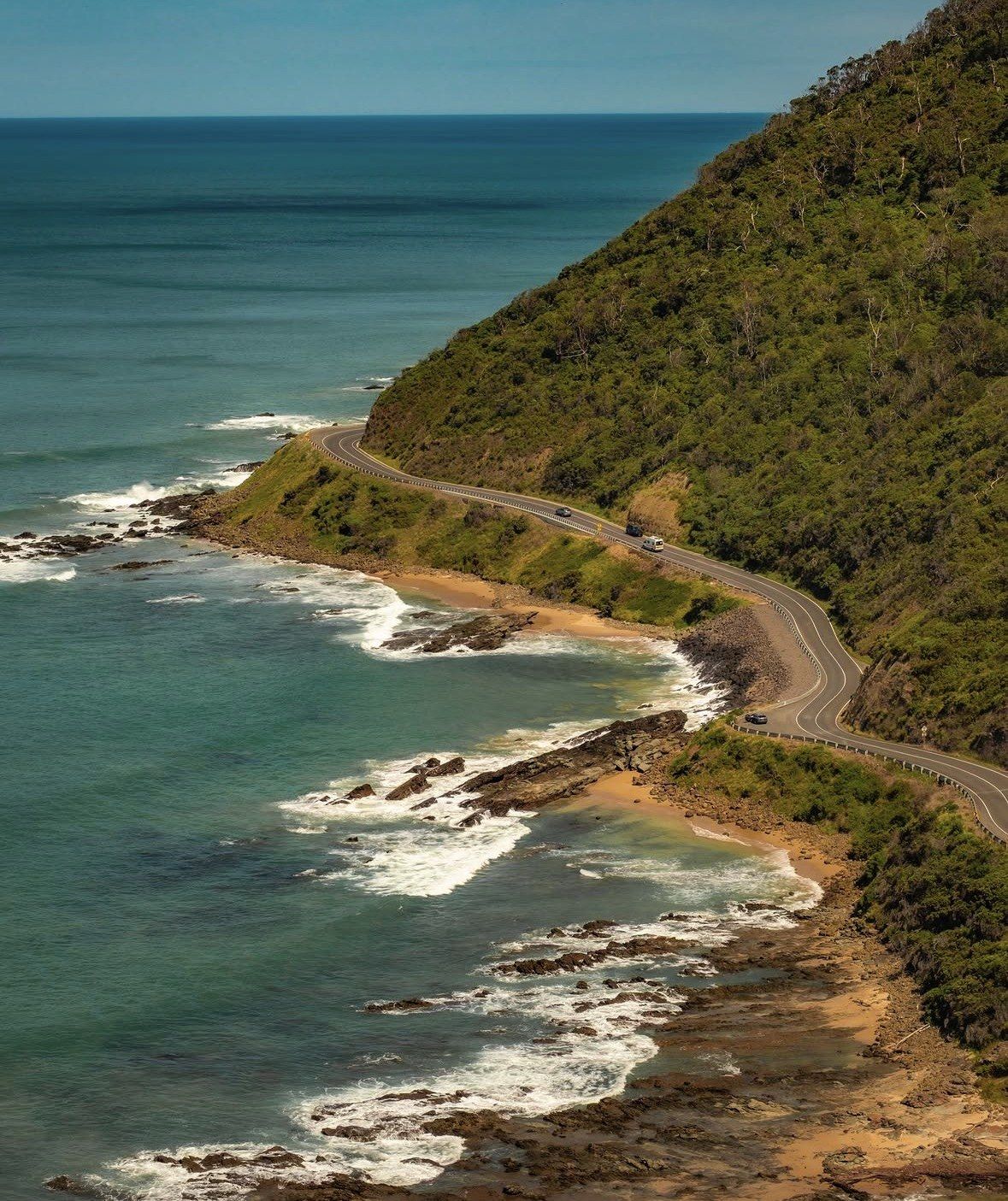
Daylight decides how many stops fit into a day. The longest day falls around 22 December and the shortest around 22 June, so a December itinerary can hold a clifftop stop well into the evening while a June one runs out of light while you are still driving. Between June and August, cut one stop and keep the narrow, winding stretch between Lorne and Apollo Bay for daylight hours, with a break every 45 to 60 minutes as the official advice has it.
Waterfall flow follows the winter rain, and August is the wet month: 126.2 mm at Apollo Bay over 15.0 rain days, 108.7 mm at Lorne. Check closures before you build a day around a waterfall. At the November 2026 research date the temporary closure list covered Erskine Falls, Phantom Falls, Won Wondah and Henderson Falls, St Georges River Loop and Cora Lynn Cascades, which is most of what people drive inland for after rain.
Coastal tracks hold up through the wet months better than the forest loops. For a wet-month walk, the Wye to Kennett River track covers 4.6 km one way from the top of Morely Avenue near the Wye River hotel, undulating the whole distance with steps and creek crossings on it. Close by, Kennet Road and the Kennet-Wye Jeep Track remain closed after January flood damage and Wye Road is shut until further notice, so check the current status rather than an old map.
February's 49.3 mm over 5.6 rain days makes late summer the most settled walking window on paper, though it lands in the heaviest traffic. March gives the calmest Otway mornings at 21.6 km/h, and the 2027 Victorian school terms run 27 January to 25 March, 12 April to 25 June, 12 July to 17 September and 4 October to 17 December, so aim for weeks inside those terms.
Wildlife seasons and the Bells Beach dates
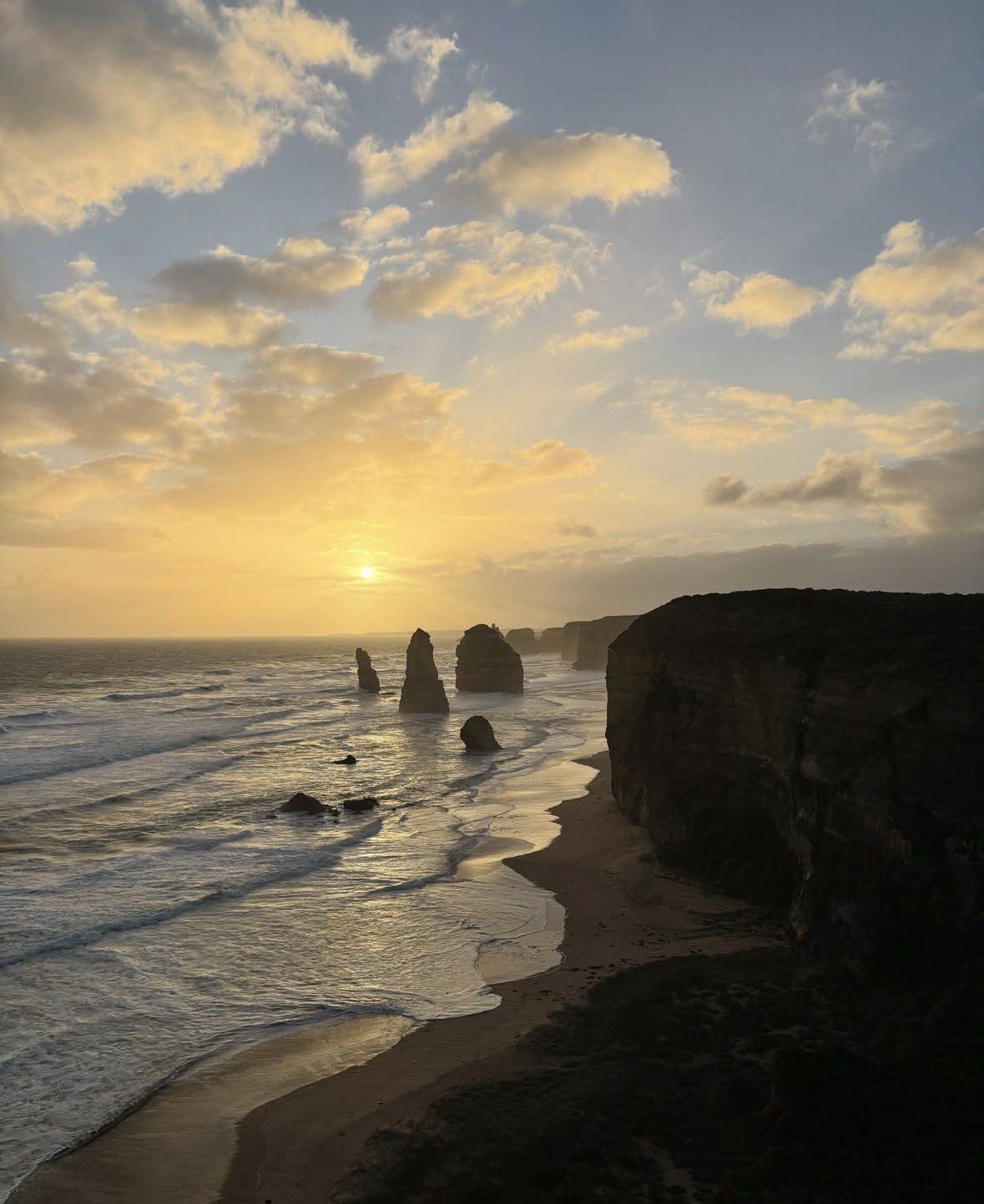
Short-tailed Shearwaters return to Mutton Bird Island at Loch Ard Gorge at dusk between October and April, the strongest reason to still be on the coast at the end of the day in that half of the year. Below the Twelve Apostles and London Bridge lookouts the Little Penguin arrival is set by sunset rather than by the calendar: 10 to 15 minutes after it for the first birds, 20 to 25 minutes after for most of them. Both are tied to sunset, so the month you pick sets the hour you need to be standing there, and the penguin tracks stay visible in the sand.
Whales take the other half of the calendar. The southern right whale window covers May to October in Victorian waters, narrowing to June through September for calving at Logans Beach in Warrnambool, where the animals often come within 100 metres of the sand; the platform in the dunes stays open all year and is reached by a ramp for accessible viewing. For humpbacks the active months off Victoria are June and July, then September and October again. Blue whales may be off the Shipwreck Coast from November to May, but only well offshore, so do not plan a day around them.
Two surf dates anchor the eastern end. Easter brings the Rip Curl Pro to Bells Beach every year, and the date to note after that is 2 to 6 December 2026 for the Bioglan Bells Beach Longboard Classic. Both pull crowds into the Surf Coast towns, which matters for beds and parking more than for the weather.
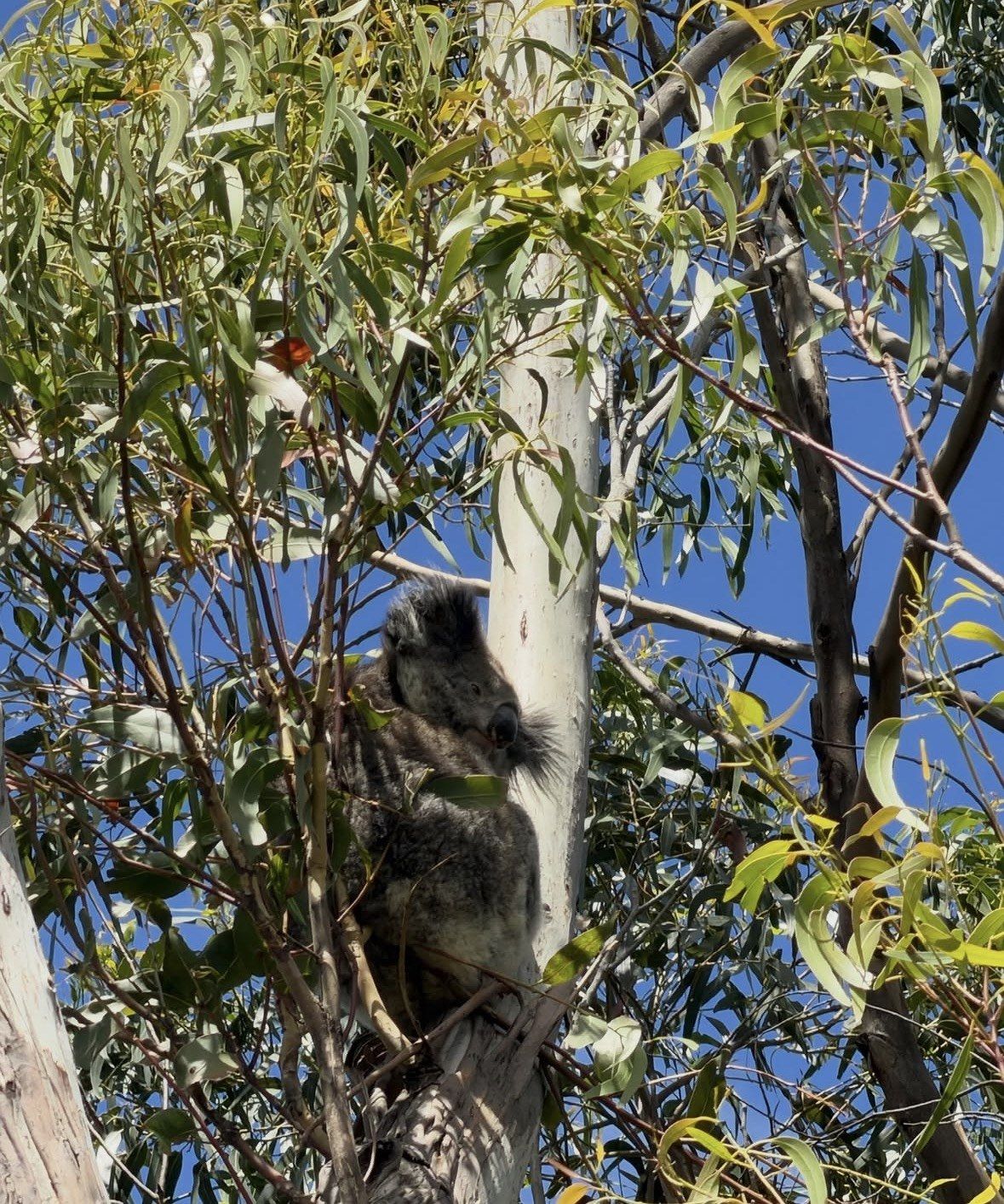
Wildlife rules apply in every season. Do not feed or touch animals, view koalas from a walking track or designated area instead of stopping on the roadside, and leave sick or dead birds alone. The H5 bird flu warning in force across the parks along the road applies whatever month you travel, and sightings go to the Emergency Animal Disease Hotline on 1800 675 888.
What hour to be at the Twelve Apostles, and which tour gets you there
The precinct is busy in every month, and the land manager names early morning and later afternoon as the quieter windows. More than 2 million people reach the lookouts each year and the Victorian government's stated target is 6 million, so pick an arrival time in the first or last hours of the day. Every arrival slot has to be booked in advance. The boom gate on Booringa Road has worked that way since 16 October 2026, for the car park and the lookouts and not only the visitor centre, and from April 2027 a booking fee applies at an amount still unpublished.
Opening hours leave room at both ends of the day. The official site puts the car park at 6:00 AM to 9:00 PM with departures at any time, against 8:00 AM to 8:00 PM for the Keerray Woorroong Visitor Centre and a last arrival at 7pm. Arrangements along this coast kept changing through 2026, so confirm hours and booking rules for your own date.
Three tour formats on this site put you at the rail at three different hours. A reverse itinerary drives inland first and reaches the Apostles earlier in the day: the boutique version, capped at 12 guests, runs 12 hours from $97, rated 4.9 ★ (4945 reviews), with national park fees and a multilingual interactive audio guide included. The sunset day tour works the late window instead, 11 to 14 hours from $112, rated 4.9 ★ (1303 reviews), and it is the format that lines up with dusk between October and April. The small-group eco day covers the most of the route, 14 hours from $112, rated 4.9 ★ (7098 reviews), with pickup from selected hotels, WiFi, park fees and coffee or tea listed.
For the short days of June and July, the reverse itinerary is the one that gets the main stop done in good light. For the long evenings of December and January, the sunset timing is the format that puts them to use. Decide the hour you want at the lookouts, then choose on that basis.
- Warm, dry, long evenings and the heaviest traffic: December to February, with beds arranged months ahead
- Calm mornings and the Easter surf window: March to early May
- Whales, full waterfalls and the windiest clifftops: June to August, with one stop fewer for the light
- Shearwaters back at the gorge and spring wildlife inland: October and November
- Any month: reach the lookouts before mid-morning or in the last part of the afternoon
Questions people ask
Does rain ruin a Great Ocean Road day?
No. With 127.1 rain days on the Apollo Bay record, a wet spell is part of what this coast does, and a shell plus a warm layer handles it. The Twelve Apostles precinct has indoor space, including gallery and exhibition rooms and a cafe, so a squall is something you sit out. With the car park taking vehicles between 6:00 AM and 9:00 PM and no fixed exit time, a lookout stop can be pushed to a drier hour later the same day.
Which weeks are quietest at the Twelve Apostles?
The lookouts are busy in every month, so the real choice is avoiding the school-holiday peaks. Skip Monday 21 December 2026 to Wednesday 27 January 2027, the Victorian school summer break and the fullest stretch of the year. Target a week that falls inside a 2027 school term instead: 27 January to 25 March, 12 April to 25 June, 12 July to 17 September, or 4 October to 17 December.
Can I see the penguins in winter?
Little Penguins come ashore below the Twelve Apostles and London Bridge lookouts at dusk, starting 10 to 15 minutes after sunset with most arriving 20 to 25 minutes after, so the shorter days around the 22 June solstice mean an earlier wait rather than no chance. The car park closes at 9:00 PM according to the official site, which leaves room at the late end of the day. Entry to the precinct has needed a booking since 16 October 2026, car park and lookouts included.
Why does it feel colder at the lookouts than the forecast says?
The viewing platforms sit on exposed clifftops with nothing between them and the Southern Ocean. Mean wind at Cape Otway Lighthouse runs from 21.6 km/h at 9am in March to 27.6 km/h at both 9am and 3pm in August, and the Aireys Inlet sea breeze averages 20.9 km/h at 3pm across the year. Add sea spray and a 21.9 °C January afternoon stops feeling like one, so put a windproof jacket in a summer bag too.
Is late winter a bad time to come?
It is the wettest and windiest stretch, with 126.2 mm over 15.0 rain days at Apollo Bay in August and the year's strongest mean winds at Cape Otway, and the shortest daylight falls around 22 June. What you get in return is southern right whales in Victorian waters from May to October, calving at Logans Beach from June to September, and far fewer vehicles at the lookouts. Build a shorter day with fewer stops and keep the winding section between Lorne and Apollo Bay in daylight.
Read also