In shortSouthern right whales use Victorian waters from May to October, and the one dependable land site is the Logans Beach platform at Warrnambool, where females calve between June and September and often glide within 100 metres of the sand. Sightings are also logged off Torquay, Fairhaven and Port Campbell. Built into the dunes above the nursery, the platform stands there in every season rather than only in winter, and a ramp takes you up to the viewing rail.
May to Octobersouthern right whales in Victorian waters
June to Septembercalving months at the Logans Beach nursery
100 metreshow close whales glide to the Logans Beach shore
from $6673-day tour with a night in Warrnambool
Whale season in Victoria runs May to October
Southern right whales come into Victorian waters from May to October to give birth and raise their calves, and that window sets the season for the whole coast. The south-eastern Australian population is listed as endangered in Victoria, with only about 300 animals left, so no day on a clifftop is a guaranteed sighting. Of the 95 southern right whale sightings recorded in Victoria last season, most were around Portland and Warrnambool, with the rest spread along the Surf Coast and the Great Ocean Road at Torquay, Fairhaven and Port Campbell.
Humpbacks pass twice a year. They are most active off Victoria during the northern migration in June and July, then again on the southern migration in September and October. Blue whales may be present off the Shipwreck Coast from November to May, but they stay well offshore and land-based sightings are rare, so there is no point building a trip around them.
| Species | When off Victoria | Where sightings are recorded | Seen from land? |
|---|
| Southern right whale | In Victorian waters May to October, with Logans Beach calving June to September | Mostly Portland and Warrnambool, also Torquay, Fairhaven, Port Campbell | Yes, often within 100 metres of the Logans Beach shore |
|---|
| Humpback whale | June and July heading north, September and October heading south | Victorian waters during migration | Possible from open headlands |
|---|
| Blue whale | November to May | Off the Shipwreck Coast, well offshore | Rarely |
|---|
The Logans Beach whale nursery and its viewing platform
The whale-watching platform on Logans Beach Road, Warrnambool 3280, is the one spot on this coast where land-based viewing is a plan rather than a gamble. It stands in the sand dunes above the beach, is open year-round and has a ramp for accessible viewing. Females calve here between June and September and often glide within 100 metres of the shore, which on a calm day is close enough to watch a calf roll beside its mother without lifting binoculars.
Logans Beach is the only established nursery in south-east Australia where females return regularly to nurse their calves, and the water in front of it is closed to traffic for the season. A whale nursery exclusion zone operates between Gaul's Cave and Point Ritchie from 1 June to 31 October each year, barring all powered watercraft including boats and jet skis. A vessel entering it faces a fine of $3,634, enforced by the Conservation Regulator, and breaches can be reported to Crime Stoppers Victoria on 1800 333 000.
Outside the zone, Victorian minimum approach distances still apply: 50 m for swimmers and surfers, 200 m for boats, 300 m for jet skis and 500 m for aircraft and drones, with boats slowing to 5 knots within 300 m of a whale. That 500 m figure settles the drone question before you unpack it.
Wildlife day if the far west does not fit
With Warrnambool out of reach on your dates, the Premium Small Group Great Ocean Road & Wildlife with Lunch is the closer alternative: a 12-hour day, from $112, rated 5.0 ★ (18 reviews). Lunch comes with it, along with morning tea or coffee by the beach, and cancellation is free up to 24 hours before departure.
★ 5.0/5 · 18 reviews
Where else whales are spotted along the route
Torquay, Fairhaven and Port Campbell all appear in last season's Victorian sighting record, so a winter scan from any headland with open water in front of it is not wasted time. The pattern is simple: the further west you stand, the better the odds, because the great majority of sightings cluster around Warrnambool and Portland. East of Warrnambool, treat a whale as a bonus on a day you were spending on the coast anyway.
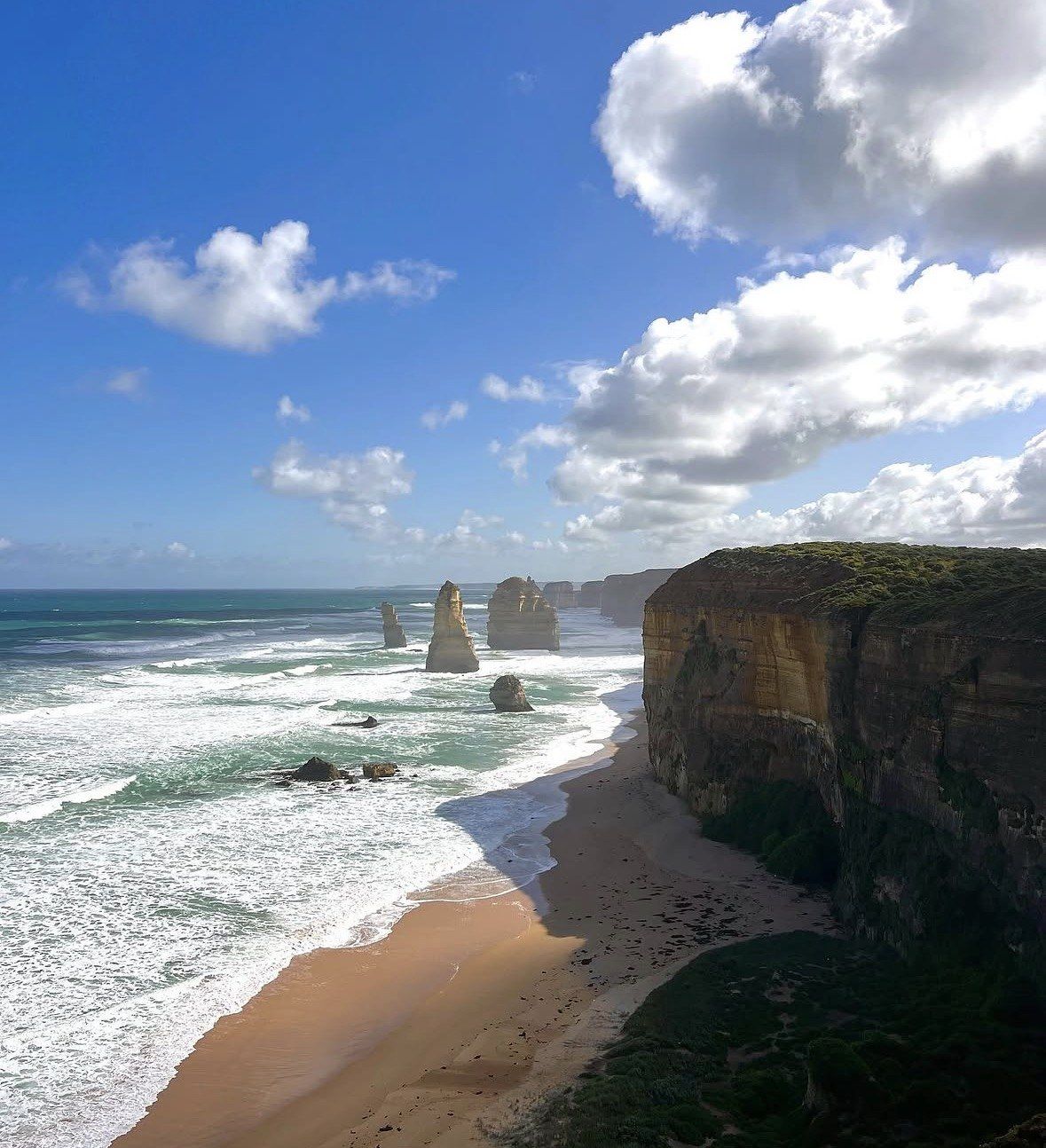
If you plan to scan from the Twelve Apostles, deal with the booking first. The lookouts and the car park have sat behind a compulsory reservation since 16 October 2026, as has the visitor centre, and the boom gate that lets cars through is on Booringa Road at Princetown, some 7 kilometres east of Port Campbell. The land manager also names early morning and later afternoon as the quieter times there, which happens to suit whale watching too. Leave the dog at home if these cliffs are on your list, because the ban runs across Port Campbell National Park as a whole, the Apostles precinct and Loch Ard Gorge.
What to take to the clifftop and when to stand there
Binoculars make more difference here than anything else in the bag. Whales give themselves away by a blow, a dark back breaking the surface or a tail held up out of the water, and all three read as nothing at all to the naked eye once the swell is up. Pick a section of water, work across it slowly, then start again, and stay longer than feels reasonable before you walk back to the car.
Dress for a cold, exposed platform. Warrnambool Airport averages a July maximum of 13.0 °C and a minimum of 5.1 °C, with 892.7 mm of rain a year across 140.7 rain days, so peak whale season here is cold and often wet. The long-record station at Cape Otway shows late winter is the windiest period on this coast, with mean winds of 27.6 km/h at both 9am and 3pm in August. A windproof shell and a hat that will not blow off matter more than a camera.
Go early in the day where you can. On the Surf Coast the recorded afternoon sea breeze is stronger than the morning wind, averaging 20.9 km/h at 3pm, and a flatter sea is an easier sea to read. Daylight is short in the middle of the season, with the fewest hours falling around 22 June, so plan the drive so you arrive with light to spare rather than chasing it. Do not count on a phone signal for the run out to the dunes, because coverage along the route drops without warning: save the map offline before you go.
One rule applies the whole length of the coast: an H5 bird flu warning is active across Great Ocean Road parks. Do not touch sick or dead wildlife, including birds or seals on the sand below the dunes, and report what you find to the Emergency Animal Disease Hotline on 1800 675 888.
- Binoculars, and a strap so they are not in your pocket when something surfaces
- Windproof outer layer, warm mid-layer, a hat that stays on
- Offline map and your accommodation address, saved while you still have a signal
- No drone: the minimum approach distance for aircraft and drones is 500 m
- Report sick or dead wildlife to 1800 675 888 and leave it alone
The town at the western end: beaches, Flagstaff Hill and Tower Hill
Warrnambool sits about three hours south-west of Melbourne, past the official end of the memorial road: the 242 kilometres that begin at Torquay finish at Allansford, a short drive east of the city. The heritage listing covering this stretch dates from 2011, when Great Ocean Road and Scenic Environs was entered on Australia's National Heritage List. Arriving from the east, this is where the cliffs give way to a working regional city with long beaches, a river mouth and the nursery coast in front of it.
Flagstaff Hill Maritime Museum and Village is the heritage precinct in town. Its By Day session runs 9:30 am to 4:00 pm with a costumed Heritage Walk at 11:30 am, and there is a sound and light show after dark, which pairs well with a late-afternoon spell on the whale platform. Lake Pertobe playground is the standard fallback with children when the wind off the water becomes unbearable.
Tower Hill Wildlife Reserve lies inside an extinct volcano 18 km west of town off the Princes Highway, roughly a 15-minute drive from the centre, and is reliable for emus, kangaroos, koalas and waterbirds. Spring is the best time there, for emu and swan chicks and kangaroo joeys. Only assistance dogs are allowed, and feeding the animals is not on: hand-fed wildlife loses foraging skills, gathers in unnatural numbers that spread disease, develops dietary problems and turns aggressive.
Getting this far west takes more than one day
Single-day runs from Melbourne turn around well east of Warrnambool, so Great Ocean Road whale watching at the nursery is not something you add to a day trip. The regional tourism body says outright not to drive the road in one day and recommends spreading it over at least two or three. Whale season also avoids the worst of the crowds: the busiest window is the Victorian school summer holidays from 21 December 2026 to 27 January 2027, while the 2027 winter term break falls between 25 June and 12 July, which is the one patch of the season to expect company on the platform.
One product on this site sleeps at the western end, the Melbourne to Adelaide 3-Day Great Ocean Road & Grampians Tour: 3 days, from $667, rated 4.9 ★ (67 reviews). Two nights are included, one in Halls Gap and one in Warrnambool, plus breakfast and dinner, admission to all national parks, around 6.5 km of guided bush walking, and a one-way finish in Adelaide rather than a return to Melbourne. Departure is from the Immigration Museum at 400 Flinders St, on the corner of Market St, at 7:35am. Staying the night in Warrnambool is what puts the dunes within a short drive instead of a long one; ask the operator what the itinerary covers on your date.
A private coast day keeps the clock in your hands. The Great Ocean Road and 12 Apostles Private Day Tour runs 8 to 12 hours, from $280, rated 5.0 ★ (25 reviews), and takes 1 to 3 guests with a professional driver-guide who collects you from your own accommodation and returns you to the same place. Tolls and parking fees are covered, bottled water and USB-C charging are on board, and cancellation is free up to 24 hours ahead. Check with the driver-guide what fits inside the hours before you count on anything west of Port Campbell.
Prices, ratings and arrangements here were checked in November 2026 and shift. For current coast and track conditions at the western end, the Great Ocean Road Coast and Parks Authority answers general enquiries on 1300 736 533.
Questions people ask
Are there whale-watching boats at Logans Beach?
No powered watercraft of any kind may enter the whale nursery exclusion zone between Gaul's Cave and Point Ritchie from 1 June to 31 October, boats and jet skis included. Viewing in the nursery season is from the clifftop platform in the dunes. Outside the zone, boats must keep 200 m away and slow to 5 knots within 300 m of a whale.
Is the Logans Beach whale watching platform accessible?
The platform on Logans Beach Road sits in the sand dunes and has a ramp for accessible viewing, and it is open year-round rather than only in the calving months. It is exposed to the weather on all sides. Facilities on site were not confirmed at the time of writing, so plan toilets and coffee around the town centre.
What are the chances of seeing a whale from the Twelve Apostles?
Port Campbell appears in last season's Victorian sighting record, so it happens, but the overwhelming majority of the 95 recorded sightings were further west around Warrnambool and Portland. Treat it as luck rather than the reason to be there. Since 16 October 2026 you need a booking to reach the precinct car park and lookouts, and little penguins come ashore below the cliffs at dusk.
How cold does it get on the coast during whale season?
Warrnambool Airport averages a July maximum of 13.0 °C and a minimum of 5.1 °C, with 892.7 mm of rain a year over 140.7 rain days. The Cape Otway record shows late winter is also the windiest period, with means of 27.6 km/h at 9am and 3pm in August. Standing still on an exposed platform in that is colder than the numbers suggest.
What should I do if I find a dead bird or seal on the beach?
Leave it where it is and do not touch it. The parks along this coast are under an active H5 bird flu warning. Call the Emergency Animal Disease Hotline on 1800 675 888 and tell them what you saw and where.
Read also